How does AI change the workplace?
In recent years, many companies have focused on creating hybrid offices. These spaces supported partly remote work. They also added more places for meetings, calls and collaboration. This trend is still important. But another topic is becoming more visible. The main question may no longer be only where we work: at home or in the office. The bigger question is how AI may change the way the whole organisation works.
This article is not a guide on how to use ChatGPT, Copilot or other AI tools. We are interested in something different: how artificial intelligence may affect teams, responsibility, decision-making processes and office design. Below, we share our observations and our vision of what the office of the future may need to support.
What does AI workplace mean?
AI Workplace is still a developing concept. We can understand it as a work environment designed for an organisation where artificial intelligence is part of everyday processes. AI does not only support single tasks. It may also influence who makes decisions, who checks results, who takes responsibility for risk and who makes sure that regulations are followed.
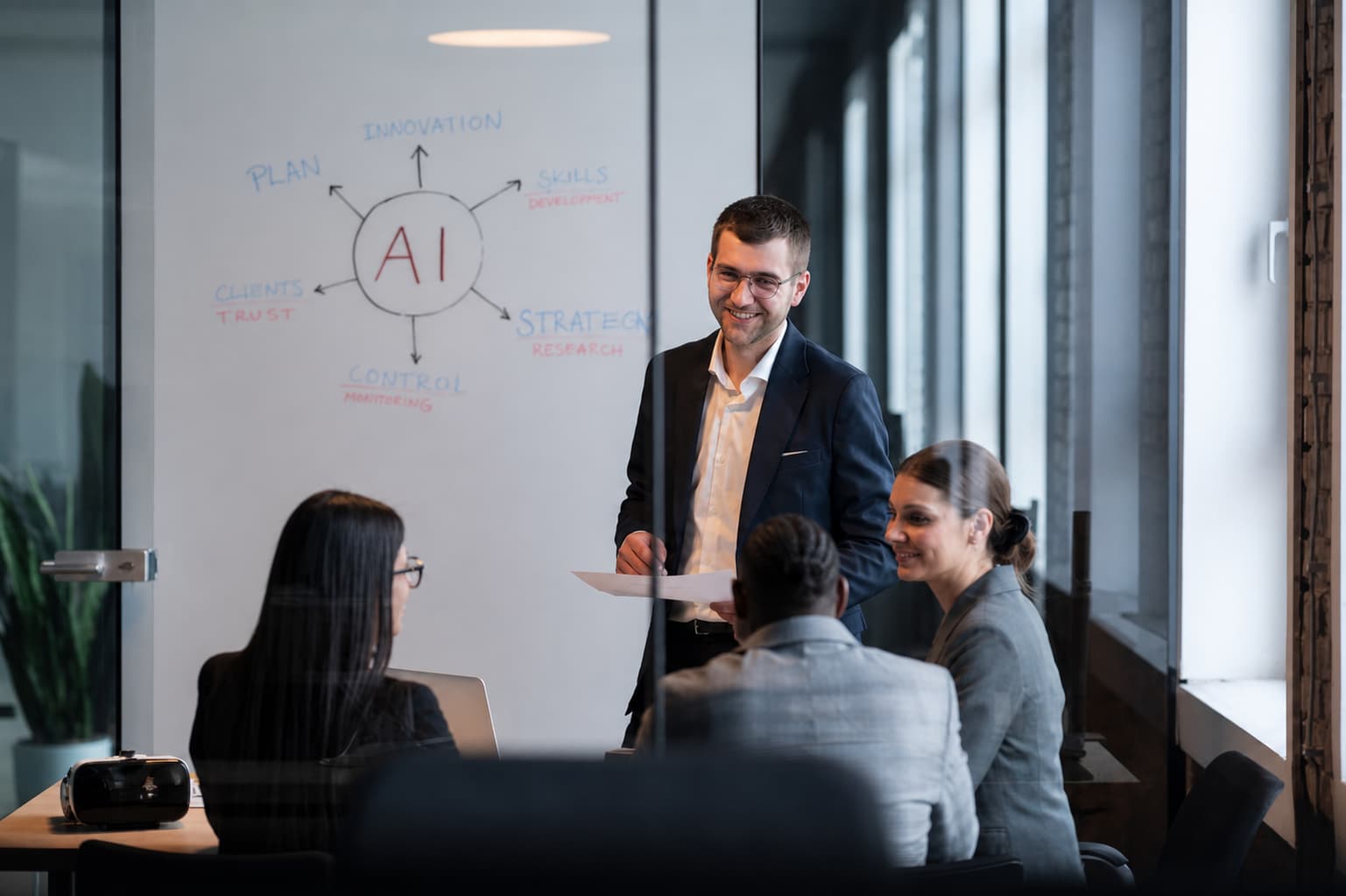
In recent years, many companies have tested AI for simple tasks. These include creating graphics, analysing data, summarising meetings or supporting customer service. But this is only the first layer. When AI starts supporting recruitment, finance, healthcare, insurance, risk analysis or business decisions, completely new questions appear.
Today, it becomes more important to ask who is responsible for actions supported by AI. European and Polish regulations, including the AI Act, are trying to keep up with these changes. They require companies and institutions to meet specific obligations. This may lead to new roles. It may also change the way work is organised in the office.
What new teams and skills may appear in companies?
In a traditional product team, the main roles were quite predictable. There was a product manager, UX/UI designer, front-end developer, back-end developer, QA, and sometimes an analyst or data specialist. AI may extend this structure.
In projects using artificial intelligence, new skills may become more important. These skills may be connected with risk, regulatory compliance, data security, ethics, model auditing and responsible use of AI. This does not mean that every company will immediately hire an AI Governance Manager or AI Risk Officer. The names of these roles will probably change.
Still, we may see more people involved in AI-related processes, for example:
- AI Governance Specialists — responsible for rules, ownership and decision frameworks
- AI Risk Managers — focused on identifying and reducing risks
- AI Compliance Specialists — checking whether AI use follows regulations
- AI Ethics Advisors — supporting responsible and fair use of AI
- AI Security Specialists — protecting data, systems and AI workflows
- AI Auditors — reviewing how models work and how decisions are made
- Data Protection Specialists — making sure sensitive information is handled properly
- Legal and HR Experts — supporting decisions where AI affects people and employment
The key point is simple. Lawyers, compliance teams, security specialists, HR, data protection, risk managers and governance experts may join product and business work more often. Organisations may become more interdisciplinary.
For the office, this means several changes. There may be a greater need for spaces where people who did not previously work together every day can meet, discuss and make decisions.
How may decision-making processes change?
AI can speed up data analysis and prepare recommendations. But faster does not always mean simpler. The more influence AI has on decisions, the greater the need for control, verification and clear responsibility.
In a traditional process, a decision could move through several known people or departments. In an AI-supported process, more specialists may become involved. One team understands the business. Another understands data. A third understands technology. A fourth checks regulations. A fifth looks at security. The decision still has to be made quickly, but risk cannot be ignored.

This may create new types of meetings. Companies may need risk reviews, compliance workshops, audit meetings, data security sessions or fast interdisciplinary discussions.

The office should support these processes. If a team needs to gather several people from different departments, discuss sensitive information and make a decision, it needs the right space. It does not always need a large conference room. Very often, a well-acoustically protected room for 2−6 people, an acoustic booth or a small team room may be enough.
What will AI teams need from the office?
Teams working with AI may need two things at the same time: fast collaboration and more privacy. This is not always easy to combine. On one hand, knowledge needs to move between departments. On the other hand, the topics may involve data, risk, people, clients or important business decisions.
In practice, this creates demand for spaces that are:
- well acoustically protected
- easy to access without long booking processes
- suitable for confidential conversations
- comfortable for small teams
- equipped with a screen and good video meeting conditions
- located close to teams that often work together
- flexible enough to change function in the future

This is important because AI may increase the number of short and intense meetings. The answer is not always to build more large conference rooms. It may be better to create a network of small, functional spaces for teamwork and decision-making.
How to support cooperation between many specialists?
One of the biggest challenges of AI Workplace may be cooperation between people from very different areas. Business wants to implement solutions quickly. IT looks at technology and integration. Legal checks compliance. Compliance reviews the process. Security asks about safety. HR thinks about the impact on people.
If each department works separately, decisions may become slow. If everyone meets only online, the process may become chaotic and tiring. If there is no place for confidential discussion, some topics may be postponed.
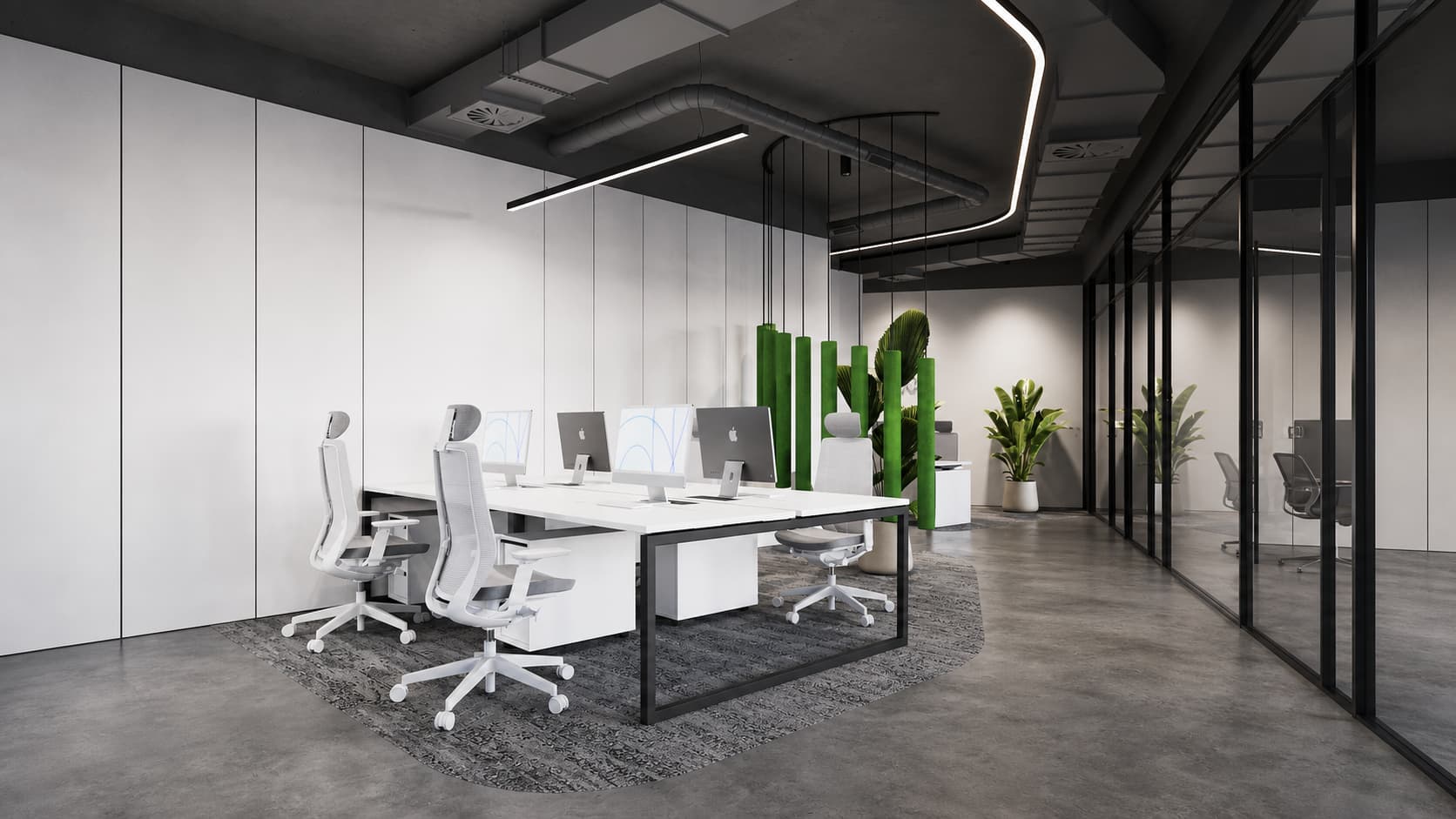
This is why team rooms may become more important in offices. They are not classic private offices. They are also not ordinary open spaces. They are more like an "office within an office" for a team working on a specific area. Such a room can include a project table, a screen, boards, workstations and access to a small confidential space.
A well-planned team room helps the team work faster. It reduces the need to constantly search for a free meeting room.
How to protect data confidentiality and information security?
In the world of AI, confidentiality may become one of the key topics in workplace design. This is not only about cybersecurity. It is also about what happens in the physical office. Can a conversation about personal data be heard in open space? Is a risk model discussed at a kitchen table? Is the team showing analysis results on a screen visible to people passing by? These are simple examples, but they are very real.
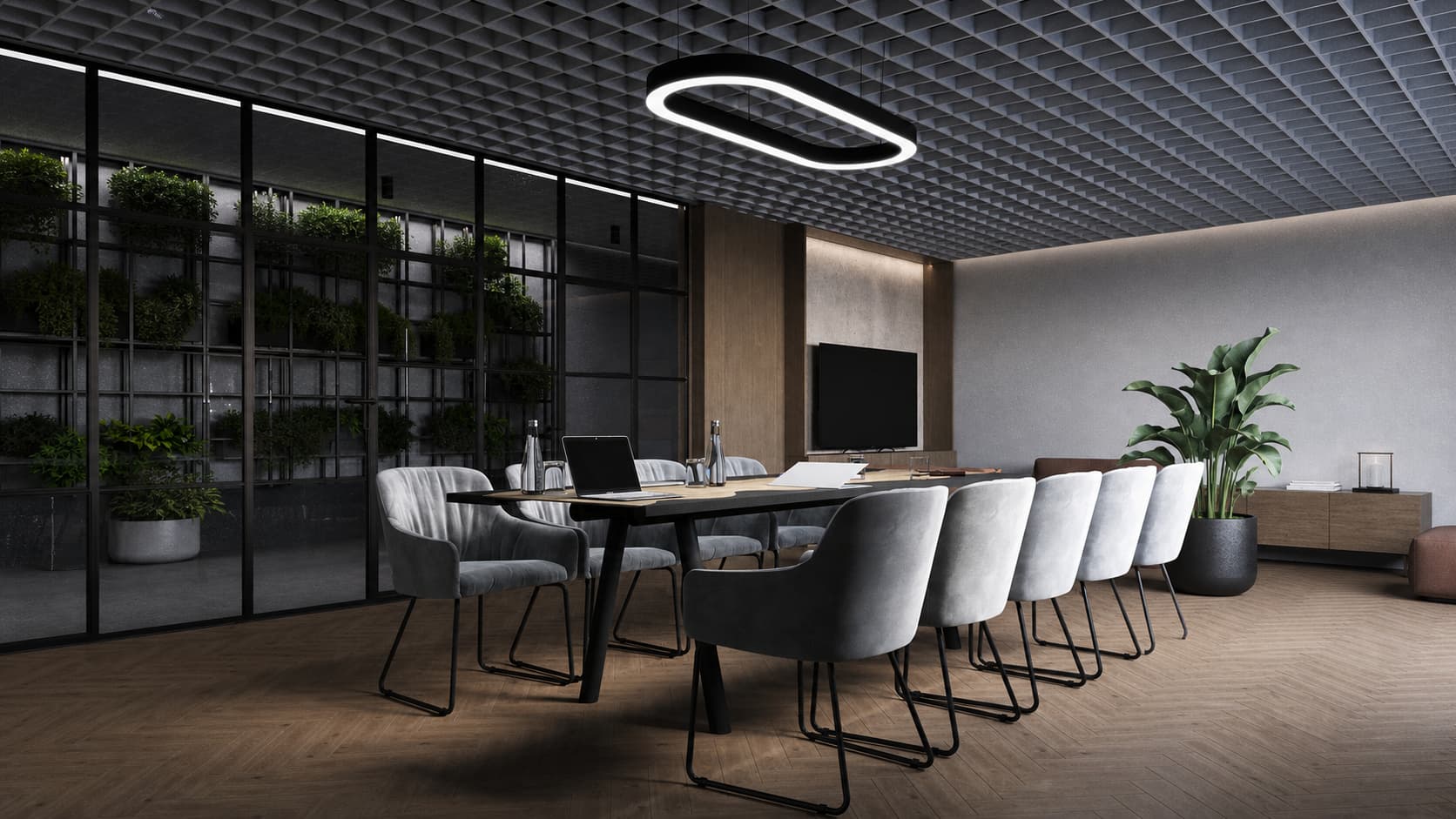
Office design can help reduce such risks. Good acoustics, smaller rooms, acoustic booths, smart screen positioning, semi-closed work zones and clear functional zoning can improve everyday safety at work.
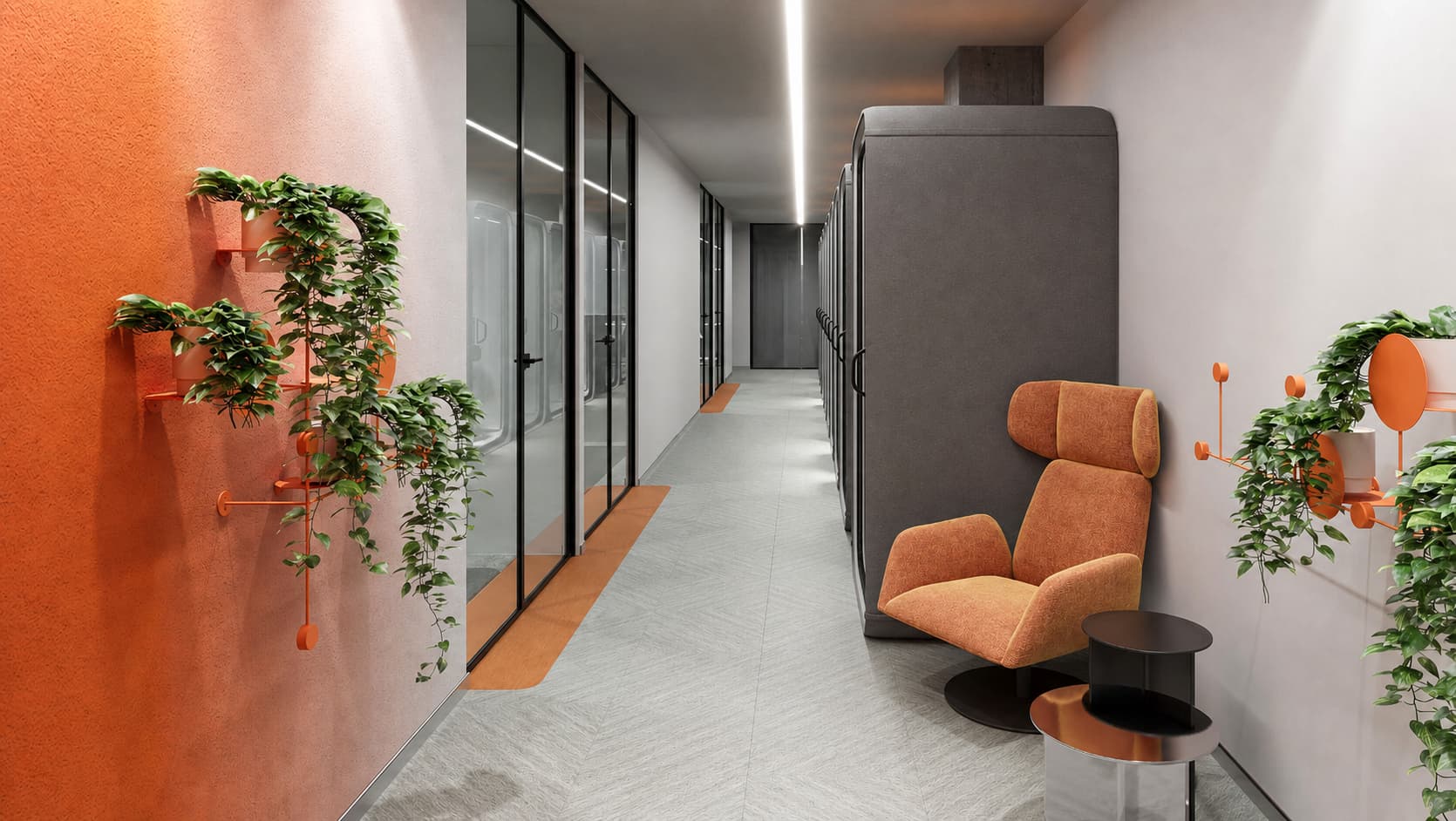
Not every office needs a radical redesign. Sometimes a few well-chosen changes are enough. They can make confidential conversations and focused work happen in the right places, not just wherever there is a free table.
How to keep decision-making fast?
AI can speed up work, but only if the organisation does not get stuck in new layers of approval. This is an important lesson. If every process gets more meetings, more committees and more decision-makers, technology will not make the company faster. It may slow it down.
That is why AI Workplaces should support quick and focused meetings. Companies need places where the right people can meet fast, discuss a topic and make a decision. In practice, these may be smaller meeting rooms, acoustic booths, workshop zones and project spaces located close to the relevant teams.
A well-designed office will not solve every organisational problem. But it can remove some barriers. It can reduce noise, lack of rooms, lack of privacy, booking chaos and the absence of good places for collaboration.
Why should office design consider AI already today?
We do not know exactly what AI Workplace will look like in a few years. This is exactly why it is worth designing flexible offices. Offices that can adapt to new roles, new teams and new processes without a major renovation.
At TENGO Design, we have been designing offices for years with the assumption that organisations change. This is why our projects often include modular solutions, acoustic booths, multifunctional zones, strong acoustic planning and layouts that can evolve together with the company.
AI may be another reason not to design the office too rigidly. If the way teams cooperate, share responsibility and make decisions changes, the workplace should have space for that change.
Are today’s offices ready for AI workplace?
AI Workplace is not a closed definition yet. It is rather a way of thinking about the future of offices. But these questions can help companies prepare for change before it becomes a daily problem.
Maybe in a few years the biggest workplace challenge will no longer be whether an employee works from home or from the office. The more important question may be different: can the office support an organisation that makes faster, more responsible and more interdisciplinary decisions?